

The European Union moved closer to fully implementing its trade agreement with the United States after negotiators from the European Parliament and EU member states reached a late-night compromise, easing fears of a new tariff escalation threatened by US President Donald Trump.
The agreement came after months of political disputes inside the bloc and growing pressure from Washington. Trump had warned that unless the EU finalized the implementation of the trade pact by July 4, the United States would introduce significantly higher tariffs on European products, including increasing duties on European cars and trucks from 15% to 25%.
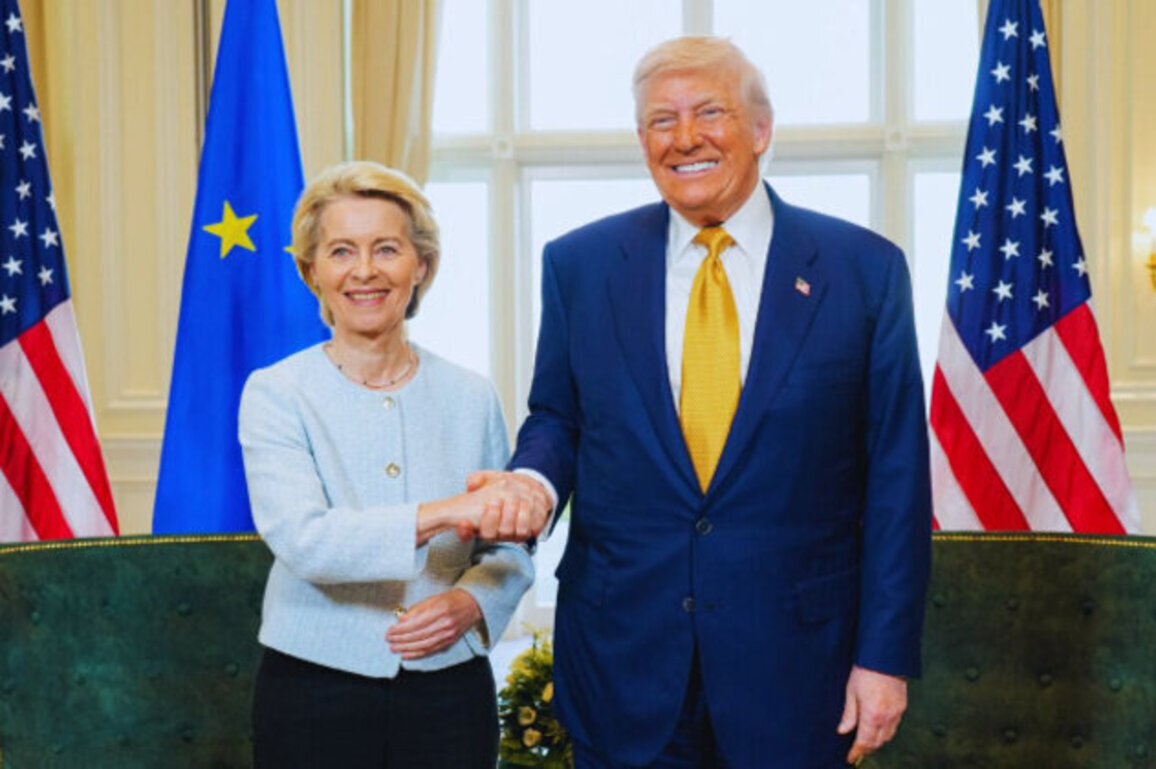
The original deal between Brussels and Washington was reached last summer during talks in Turnberry, Scotland, between Trump and European Commission President Ursula von der Leyen. Under the arrangement, the EU agreed to remove tariffs on many American industrial and agricultural imports, while the United States committed to capping tariffs on most European goods at 15%.
However, the European side delayed ratification for months amid tensions in transatlantic relations. Among the reasons were Trump's controversial statements regarding Greenland and legal uncertainty after a US Supreme Court ruling weakened parts of his tariff policy.
Negotiations between EU lawmakers, member states and the European Commission stretched for more than five hours before a compromise was reached shortly after midnight Wednesday. European officials presented the agreement as an important step toward restoring stability in transatlantic trade relations.
?Today, the European Union delivers on its commitments,? said Cyprus Economy Minister Michael Damianos, whose country currently holds the rotating EU presidency. He stressed that maintaining ?a stable, predictable and balanced transatlantic partnership is in the interest of both sides.?
Von der Leyen also welcomed the outcome, saying the EU was now preparing to fulfill its obligations under the agreement. ?Together we can ensure stable, predictable, balanced and mutually beneficial transatlantic trade,? she said, while calling for the ratification process to move forward quickly.
The compromise is expected to help prevent a new trade conflict between Brussels and Washington at a time when the European economy is already facing pressure from global instability and energy market disruptions linked to the Middle East crisis.
The United States remains the EU's largest trading partner, with annual trade between the two sides valued at roughly 1.6 to 1.7 trillion euros. At the same time, Trump's earlier tariff offensive on steel, aluminum and automotive products pushed the EU to deepen trade ties with other global partners in an attempt to reduce dependency on Washington.
Several difficult points had to be resolved before the agreement could be finalized. One of the main disputes involved a proposed suspension mechanism. Members of the European Parliament initially wanted the trade deal to be automatically frozen if Washington violated its commitments. EU governments opposed such a strict provision, and the final compromise instead gives the European Commission authority to assess potential violations and decide whether suspension is necessary.
Another controversial issue concerned US tariffs on European steel and aluminum, which currently remain as high as 50% under measures introduced by Trump earlier this year. According to the compromise text, the Commission will evaluate the situation by the end of 2026 and may suspend parts of the agreement if the US fails to reduce those tariffs.
Negotiators also agreed on a so-called sunset clause, meaning the arrangement would expire at the end of 2029 unless renewed. An earlier proposal for a 'sunrise clause,? which would have delayed implementation until the US fully honored its promises, was removed from the final version.
European Parliament trade committee chairman Bernd Lange defended the compromise despite criticism from some liberal and left-wing lawmakers. ?We are ensuring stability and security for European manufacturers,? he said after the talks, adding that Parliament had still secured important safeguards and monitoring mechanisms.
EU Trade Commissioner Maro? ?ef?ovi? also praised the outcome. ?The EU has demonstrated once again that we are a rather reliable trading partner that honors its commitments,? he said.
The agreement now heads toward a key vote in the European Parliament expected during the June plenary session in Strasbourg. While the center-right European People's Party strongly supports the deal, some lawmakers continue to oppose the concessions made to Washington, leaving uncertainty over the final parliamentary arithmetic.
Still, European officials hope the compromise will finally close a chapter of trade disputes that has strained relations between the EU and the United States for more than a year.